Experience precision hair restoration with a DHI hair transplant in Turkey. Using the Choi Implanter Pen, every follicle is placed individually. This gives your surgeon direct control over the angle, depth and direction of each graft, with no channels opened in advance and minimal downtime.
FixedAbroad performs DHI hair transplant in Istanbul for patients travelling from the UK, Europe, the Middle East and North America. If you are still comparing techniques, see our hair transplant procedure guide for a side-by-side overview of the methods.
Join thousands who made the journey. From London to Los Angeles. Chosen worldwide.
Minimally invasive
No pre-opened channels, no stitches
Greater precision and density
Natural-looking results
Already trusted by 20,000+ worldwide patients with an average rating of 4.9★
#FixedAbroadExperience
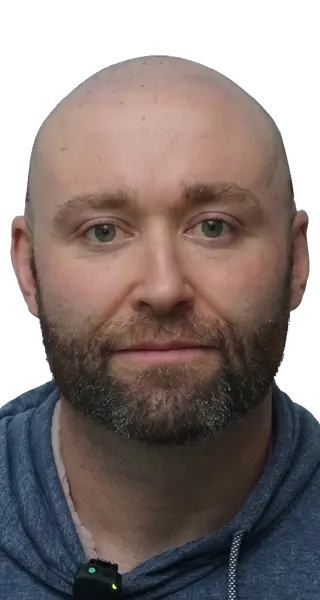
Fabrizio from Italy 🇮🇹
2,700 Grafts—DHI
Success
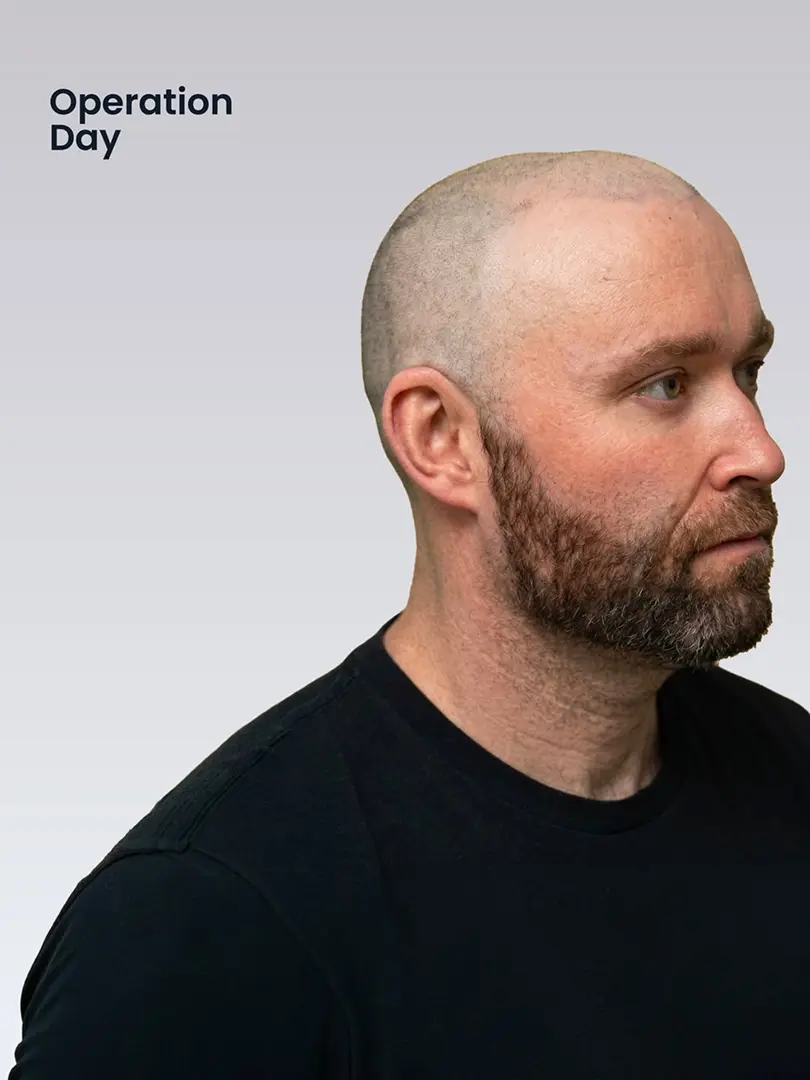
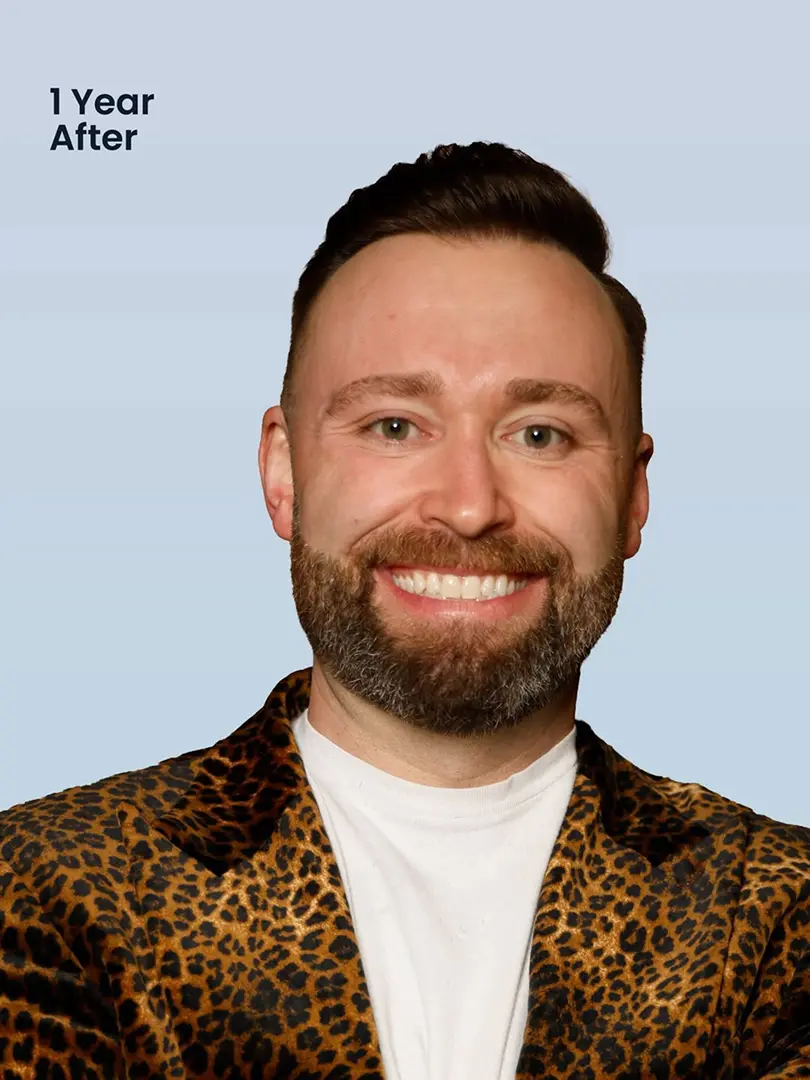
BEFOREAFTER
David Allen Williams
3,600 GraftsDHI1 year post-opFrom Illinois, US
From surgery day to the final look, my journey shows what true hair restoration looks like. By month 12, that natural hairline and density are completely locked in. 🌱
DHI - Direct Hair Implantation - is a hair restoration technique in which follicles are implanted directly into the scalp, without channels being opened beforehand. Unlike traditional methods, DHI utilizes a specialized tool called the Choi Implanter Pen, which enables the surgeon to implant hair follicles without the need for prior incisions or slits in the scalp. This method ensures a more precise placement of hair follicles, leading to a denser and more natural appearance.
The DHI technique is particularly beneficial for individuals with varying degrees of hair loss, as it allows for greater control over the angle, depth, and direction of hair growth. This results in a more aesthetically pleasing outcome, tailored to the unique hairline and growth patterns of each patient.
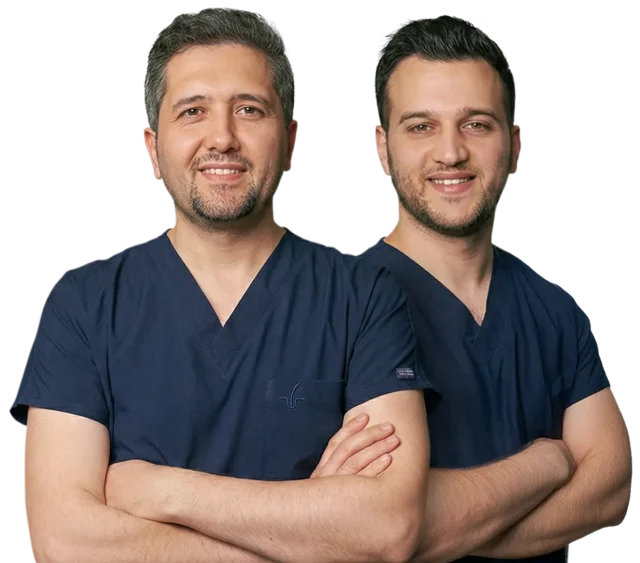
At FixedAbroad, DHI hair transplant in Turkey is performed by our surgical team in Istanbul, with the method chosen at consultation rather than sold as a default.
DHI Hair Transplant Procedure
Minimally invasive
1Consultation and Preparation
The surgeon discusses your requirements and finalizes the number of grafts and hairstyle. The hairline is marked, and necessary blood tests are taken.
Hairline design shapes the whole result. Your surgeon marks a line that suits your facial proportions and allows for how your hair loss may continue. The hairline is planned around your age and loss pattern, not simply drawn as low as possible.
2Local Anesthesia
The donor area is disinfected, and local anesthesia is used to numb the scalp. A pressure device may be used to minimize discomfort.
3Extraction of Hair Follicles
3. Extraction of Hair Follicles Follicles are extracted individually from the donor area at the back and sides of the scalp, using a semi-automated extraction tool. The donor area is finite, so extraction is spread across it rather than concentrated in one patch. This helps donor density look even after healing.
Grafts are then sorted by hair count. Single-hair grafts can be reserved for the hairline, while multi-hair grafts are used for density behind it.
4Implantation with CHOI pens
The extracted hair follicles are transplanted into the recipient area using Choi pens. This technique provides more density and ensures a natural appearance.
A DHI session runs across a single day in most cases. Because each follicle is placed individually, DHI takes longer than a comparable FUE session. Larger cases may be planned across more than one day.
A natural hair transplant, done properly in Turkey
★★★★★
5/5 Stars — Exceptional care from start to finish! My experience has been nothing short of fantastic. I was looked after throughout the whole journey, right from the initial consultation all the way through to the aftercare service. Flying to a different country for a procedure can be daunting, but the whole experience put me at ease, which is exactly what you want. The team has been brilliant at providing very useful information and help whenever I've needed it, including constant check-ins to see how I'm getting on and to provide feedback on my progress. During the surgery itself, I was looked after exceptionally well. The medical team kept me updated throughout the procedure about what was happening, continuously checking to make sure I was doing well and seeing if I needed anything. I'm really looking forward to seeing my results in the upcoming months. The whole experience was excellent, and I couldn't recommend them enough for their professionalism, guidance, and dedicated support!
★★★★★
Had an excellent experience at FixedAbroad. Dr. Ahmet Azak was meticulous in his work, and did an amazing job. From the hotel they lodge you in, to all the coordination that is involved, I had about as comfortable of an experience as anyone could have.
Would highly recommend.
★★★★★
I believe this is the best hair transplant clinic, and don't see how it gets much better, mostly because of their aftercare service. This is from them checking my progress everyday, also providing me with an extensive range of aftercare products. Also from the results I have today. Thank You, FixedAbroad!
★★★★★
Super belle clinique. Les employés sont très professionnels et exécutent un travail impeccable. Je suis content d’avoir choisi FixedAbroad pour ma greffe de cheveux.
★★★★★
I believe this is the best hair transplant clinic, mostly because of the aftercare service. Checking my progress nearly everyday, the range of after care products I recieved. Also the results I have today. Thank you, FixedAbroad!
★★★★★
Merci Résultat magnifique Suivi régulier sérieux
★★★★★
I recently chose FixedAbroad for my hair transplant in Turkey, and the entire process completely exceeded my expectations. They handled absolutely everything flawlessly—from organizing the airport transfers and comfortable hotel accommodations to the procedure itself. The medical team was highly professional, informative, and made me feel completely comfortable throughout the day. If you are looking for an efficient, well-run, and safe clinic in Istanbul, I highly recommend them!
★★★★★
Fantastic experience from start to finish!
I recently chose FixedAbroad for my hair transplant in Turkey, and the entire process completely exceeded my expectations. They handled absolutely everything flawlessly—from organizing the airport transfers and comfortable hotel accommodations to the procedure itself. The medical team was highly professional, informative, and made me feel completely comfortable throughout the day. If you are looking for an efficient, well-run, and safe clinic in Istanbul, I highly recommend them!
★★★★★
When I was looking for a place to get my hair transplant done I stumbled upon FixedAbroad on Instagram and was hearing lots of good things about the procedure. And from my experience, it was all true. From the start when they pick you up from the airport to the end of your visit in Turkey all the way through your recovery at home they are very attentive and truly show that they care about your results. I will always refer people to FixedAbroad And if you’re checking out their clinic, I would highly recommend choosing them.
★★★★★
It was excellent experience with FixedAbroad. They were always responsive before and after the procedure which makes you feel that your are in safe hands. Dr. Zafer himself performed the hairline design and channel openin which not always offered by other clinics
★★★★★
Everything was perfect, they took such good care of you and the communication was excellent. Highly recommend
★★★★★
Highly recommend, communication and experience was perfect!
The DHI process begins with a thorough consultation where the surgeon assesses the patient’s hair loss condition and discusses the desired results. Once the plan is established, the procedure typically involves the following steps:
First, hair follicles are harvested from the donor area, usually the back of the head, using a minimally invasive technique. The extracted follicles are then prepared for implantation. Using the Choi Implanter Pen, the surgeon directly implants the follicles into the recipient area, ensuring optimal placement for a natural look.
Because implantation and incision happen in one motion, the recipient area is not prepared with separate channels in advance. This limits how much the scalp is worked on and shortens the time grafts remain outside the body - the period that most affects whether a graft survives to grow.
What is a CHOI pen implanter?
The Choi implanter is a small device that is used to implant hair follicles into the recipient area of the scalp during a hair transplant procedure. It allows the surgeon to make tiny incisions in the scalp and then insert hair follicles into those incisions in a precise and controlled manner.
The Choi implanter is a popular choice among hair transplant surgeons because it allows for faster implantation of hair follicles and reduces the risk of damage to the follicles during the transplantation process. It is also thought to result in a more natural-looking hairline, as the device allows for greater control over the direction and angle of the implanted hairs.
FIXEDABROAD
Clear written quote
Up to 75% saving
GREAT CHOICE~€4k
UNITED KINGDOM~€12k
EUROPE~€11k
UNITED STATES~€16k
VALUE COMPARISON
Transparent pricing. No surprises.
It is not just about “saving costs,” but about “safeguarding the overall wellbeing” of you.
Your treatment plan and price are confirmed after consultation - and won't change on the day. No hidden fees. The price you're quoted is the price you pay.
DHI is not a different operation from FUE - it is a different way of implanting. Both methods extract follicles one at a time from the same donor area. The final step changes: with FUE, channels are opened first and grafts are placed into them. With DHI, a Choi implanter pen makes the opening and places the graft in one motion.
That one difference drives the practical trade-offs below.
What differs
DHI
FUE and Sapphire FUE
Placing the graft
Opening and placement in one motion, with a Choi pen
Channels opened first, grafts placed after
Shaving
The recipient area can often be treated without shaving surrounding hair
Usually planned around a shaved or closely trimmed scalp
Best suited to
Hairlines, defined density work, smaller and mid-sized areas
Larger areas of coverage, higher graft volumes
Grafts per session
Typically planned lower
Typically planned higher
Session length
Longer
Shorter for a comparable area
Cost
Higher
Lower for a comparable graft count
Why patients choose DHI
The reasons cluster around two things. First is control: each graft is placed directly, so the surgeon sets its angle, depth and direction. This matters most along a hairline, where a wrong angle is visible.
Second is discretion. DHI can often be planned without shaving the hair around the treated area, which matters for patients who cannot take visible downtime.
What to weigh against it
DHI is slower, usually costs more for the same number of grafts, and is generally planned at a lower graft count per session than FUE. For extensive coverage, FUE is often the more practical choice.
Neither method is better in the abstract. The right one depends on how much area needs coverage, how much donor hair is available and whether shaving is acceptable.
The number of grafts placed in a single DHI session depends on donor capacity, the size of the treated area and the density you are aiming for. Because each follicle is implanted individually, DHI is generally planned around a lower graft count than a comparable FUE session. Larger cases may be staged across more than one session.
Your graft number is confirmed at consultation. For an estimate beforehand, use ourgraft calculator.
Can women get a DHI hair transplant?
Yes. DHI often suits female hair loss well, because it can usually be planned without shaving the entire head. This technique allows for targeted implantation in thinning areas while preserving the existing hair, making it an ideal choice for female hair restoration.
How long does it take to see full results of DHI?
Initial hair growth begins within three to four months, but the full results of a DHI hair transplant typically take 12 to 18 months. During this time, the transplanted hair will gradually thicken and blend naturally with the existing hair.
What to expect after DHI hair transplant surgery?
Expect some redness, mild swelling and scabbing in the recipient area in the first days after surgery. Because DHI opens no separate channels, there are no stitches to remove and the donor area heals as small individual points rather than a line.
Most patients return to desk work and everyday routines well before any visible hair growth. The transplanted hairs then shed. This is called shock loss; it is expected and does not mean the grafts have failed. The follicle stays in place and produces new hair over the following months.
Your aftercare instructions, washing routine and follow-up are set out by the clinical team.
Who is eligible for DHI hair transplant?
DHI hair transplant is suitable for individuals experiencing hair loss or thinning who have a healthy donor area with sufficient hair follicles. It is ideal for those who want a high-density transplant without shaving their existing hair. A consultation with a specialist is required to determine eligibility.
In practice, four things decide whether DHI is the right choice for you:
How stable your hair loss is. Transplanting into an area that is still actively receding can leave gaps as the surrounding hair continues to thin, so the pattern matters more than the calendar.
Donor capacity. Hair at the back and sides is the available supply, and it is finite. Your surgeon assesses whether it can cover the area you want treated now and, if needed, later.
Scalp condition. Active scalp conditions, inflammation or scarring in the recipient or donor area affect both the plan and timing.
General medical suitability. Certain conditions and medications affect healing and need to be reviewed before surgery.
Is DHI hair transplant permanent?
Transplanted hair is intended to be a long-term result. The follicles are taken from the donor area at the back and sides of the scalp, which is genetically less sensitive to the hormone that drives pattern hair loss. They keep that resistance after they are moved.
What a transplant does not do is stop hair loss elsewhere. Untransplanted hair can continue to thin, so the plan accounts for how your loss may progress rather than only how it looks today.
Is DHI hair transplant painful?
DHI is performed under local anaesthesia, so the scalp is numbed for the duration of the procedure. Most patients describe the anaesthetic injections as the least comfortable part. Some patients may experience mild discomfort or tightness in the scalp afterward, but this is temporary and manageable with prescribed pain relief.
Does DHI hair transplant leave scars?
DHI leaves no linear scar. Because follicles are extracted individually rather than as a strip of scalp, the donor area heals as small round points instead of a line, and no stitches are needed. These points are typically not noticeable once the surrounding hair grows back to a short length.
Visible donor thinning is generally a sign of over-harvesting — taking too many grafts from too small an area. If you wear your hair very short, say so at consultation because it changes how the donor area should be harvested.
Can someone have a DHI at any age?
There is no age at which DHI automatically becomes suitable or unsuitable. What matters is whether your hair loss has settled into a predictable pattern, whether the donor area can supply what the plan needs, and whether you are medically fit for the procedure.
Patients at an early stage of loss are sometimes advised to wait because active recession can leave gaps later. Older patients can also be good candidates when the loss pattern is stable and the donor area is strong. Timing is decided at consultation, based on your pattern rather than a number.
I have already done a hair transplant before. Can I go for a second DHI hair transplant?
Often, yes. The deciding factor is what remains in the donor area. Your surgeon assesses the remaining donor density and how the first procedure was harvested, then decides whether there is enough supply to achieve a worthwhile improvement.
Repeat procedures are common — either to add density to an area treated previously or to cover hair that has continued to thin. Bring any records from your first procedure to consultation, including the graft count if you have it.
Is DHI better than FUE?
Neither is better in general — they suit different cases. DHI gives more direct control over how each graft is placed and can often be done without shaving the surrounding hair. FUE is usually more practical when a large area needs covering because it places more grafts in less time and costs less for the same graft count.
In practice, the method follows the plan. Once your surgeon has assessed your loss pattern and donor area, one of the two will usually be the better fit. For some patients, the methods may be combined in a single treatment plan.